Mount Gold
A Wanaka home shaped by landscape controls, kānuka and a carefully staged arrival
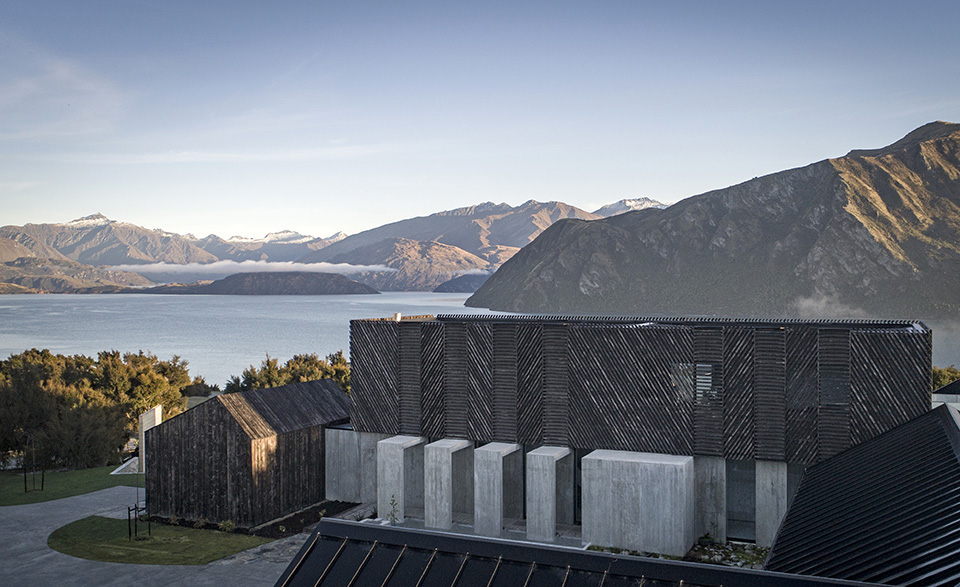
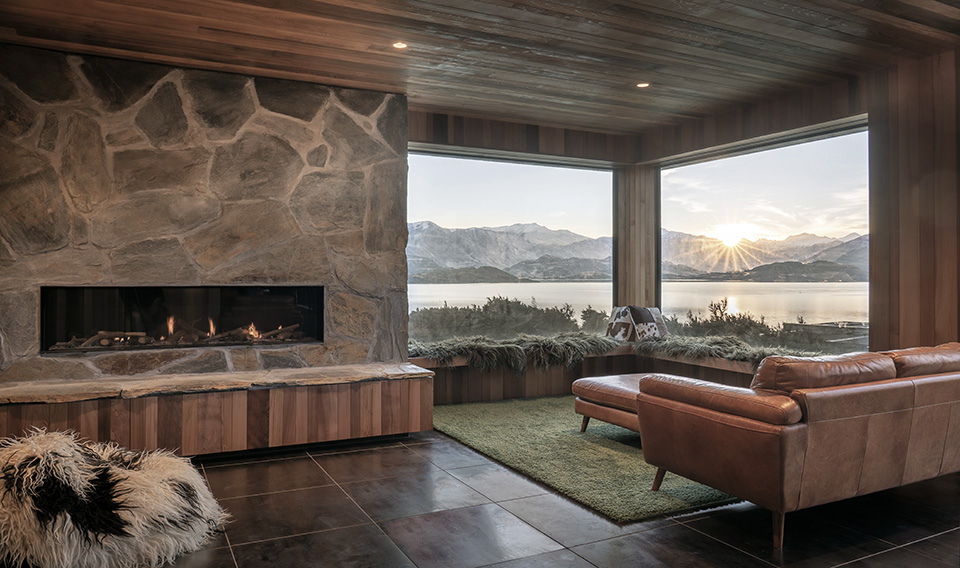
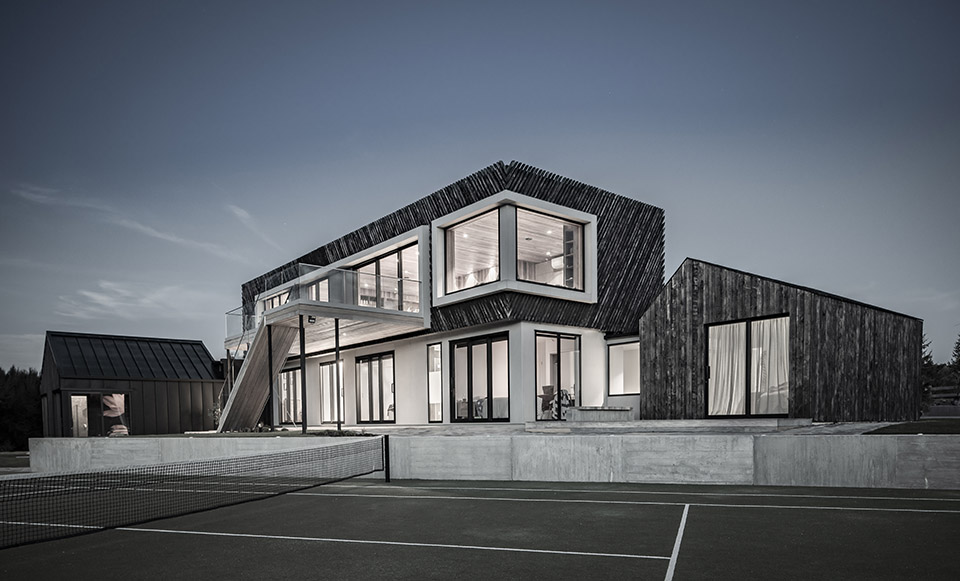
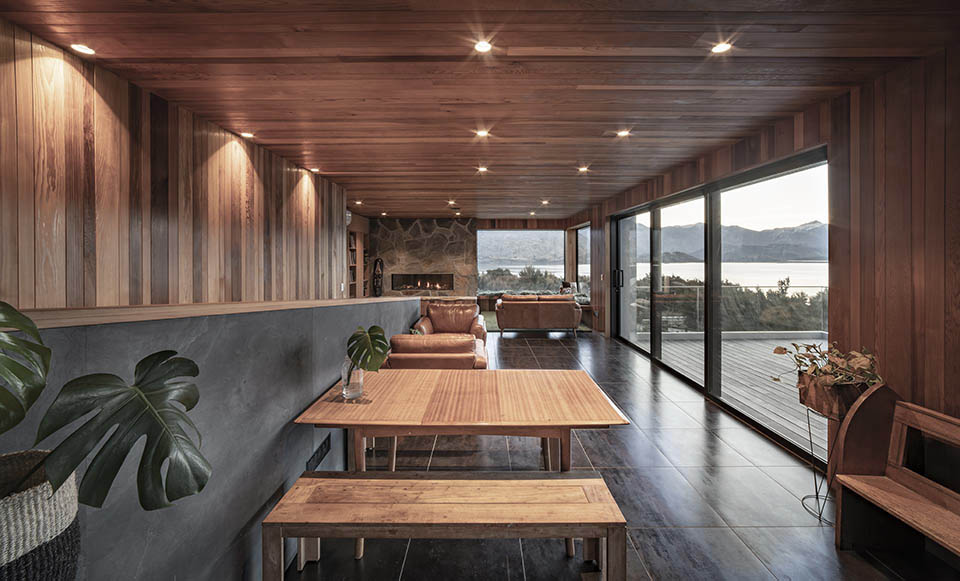
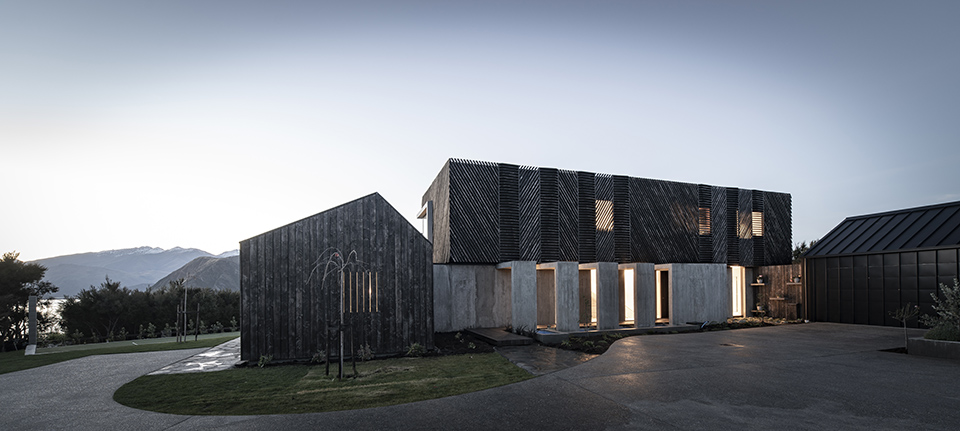
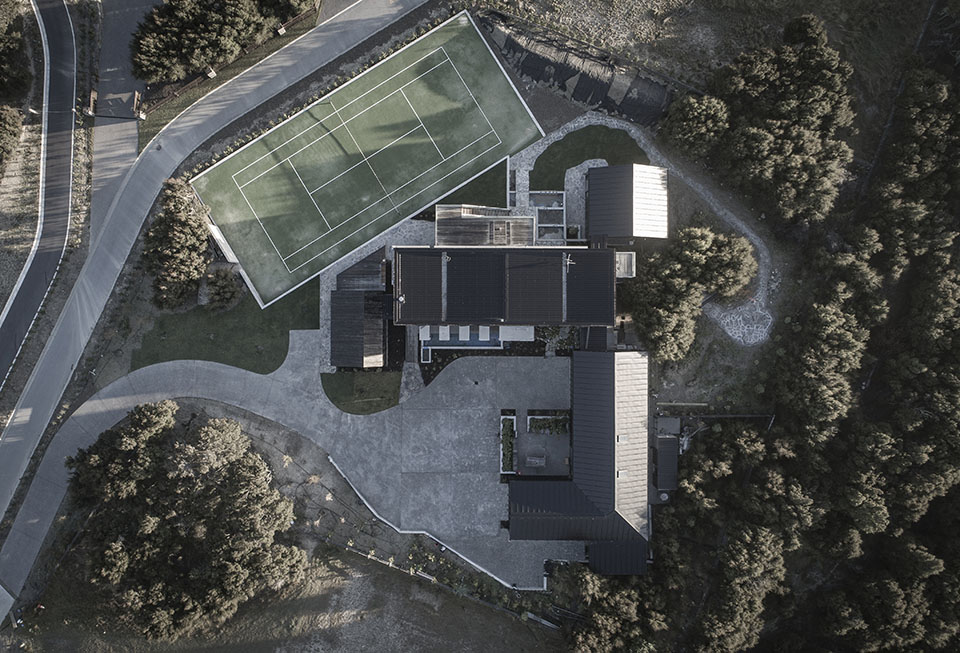
AO Architecture designed Mount Gold on a large site in Penrith Park, overlooking Lake Wanaka. The house sits within a sensitive ecological zone, where resource consent required its height, mass, colour and effect on the landscape to be carefully controlled. We worked around existing kānuka, used recessive materials and developed the house as a series of forms and spaces that reveal themselves gradually rather than presenting one large elevation to the lake.
Designing within the landscape controls
The resource consent process had a direct effect on the architecture. Existing kānuka were retained wherever possible, so the plan had to negotiate the trees already on the site.
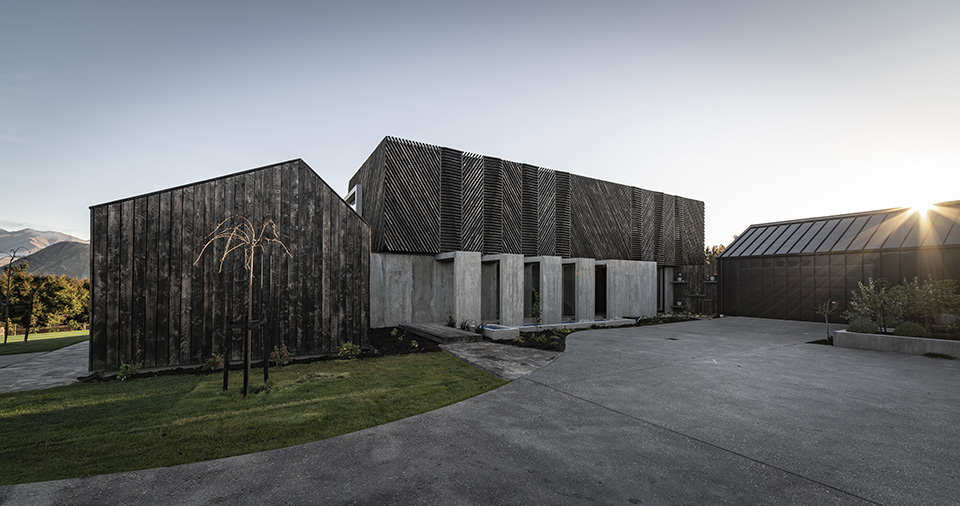
The exterior also needed to use recessive colours. The charred larch cladding responds to that requirement while giving the house a distinctive texture and depth. During consent, temporary poles were erected on site so Council could assess the proposed height and mass of the building from the lake.
That created a real trade-off: the house needed to be substantial enough for a growing family, but its scale could not simply be expressed openly across the site.
Arriving through the landscape
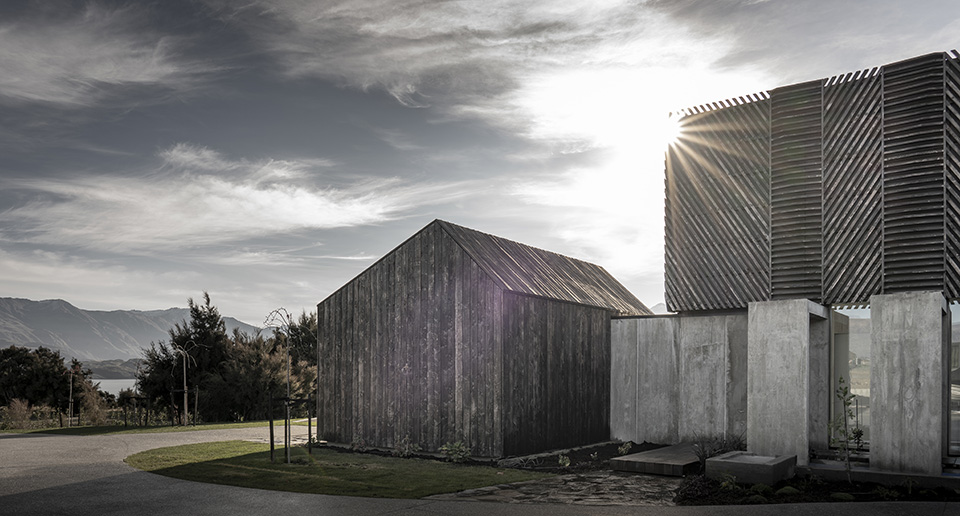
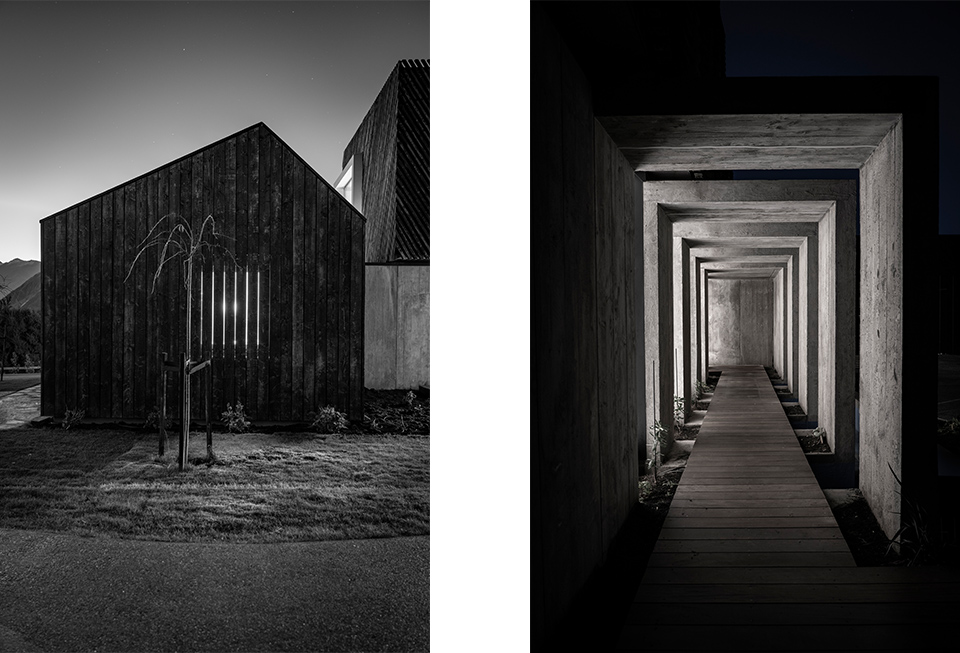
The approach begins through the kānuka and continues past the larch-clad wing, across a boardwalk beside the water and through a sequence of concrete frames.
Those frames shape the arrival as a progression. Views are held back, then opened again as you move towards the house, so the building reveals itself gradually rather than all at once.
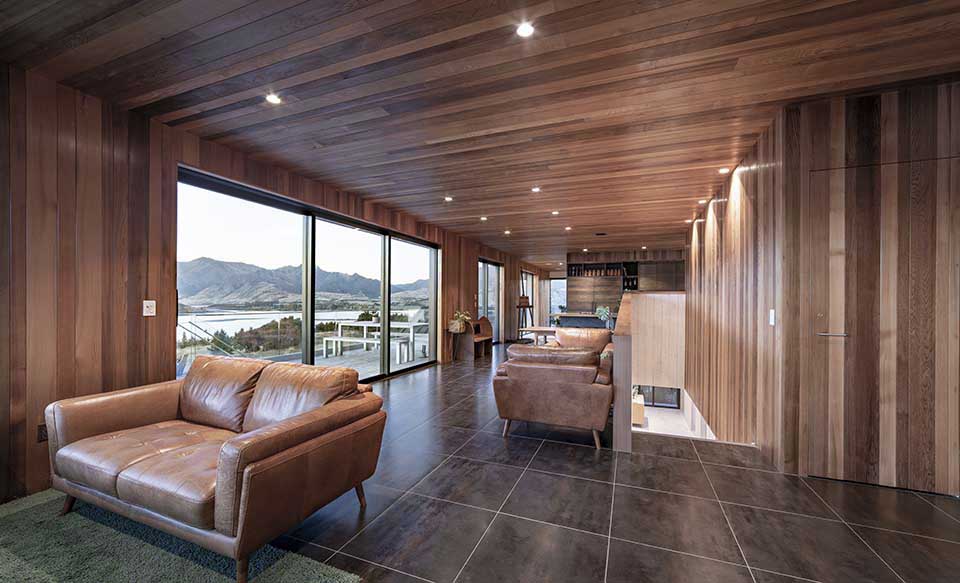
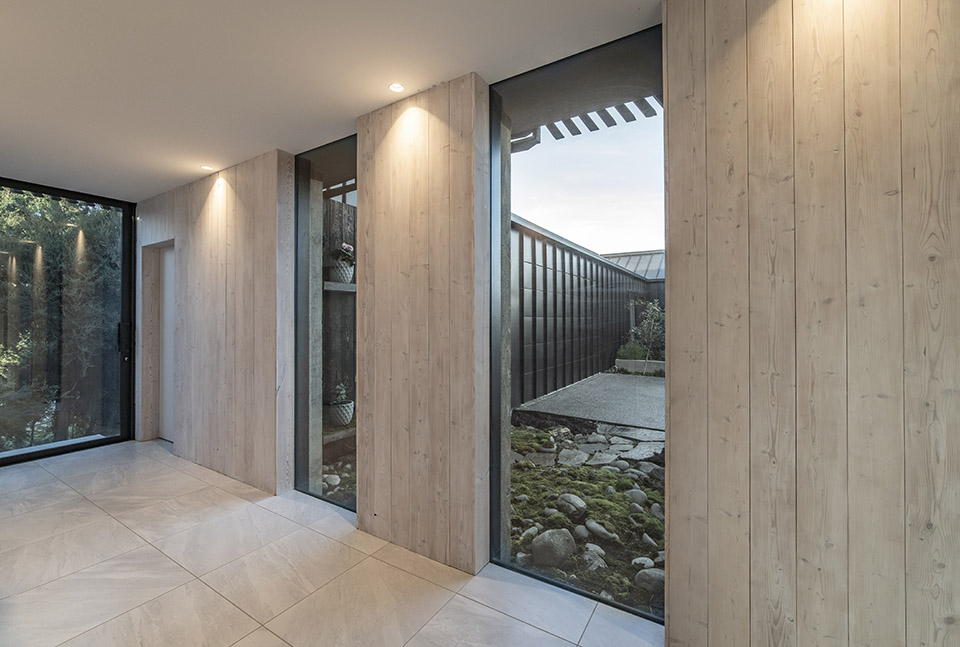
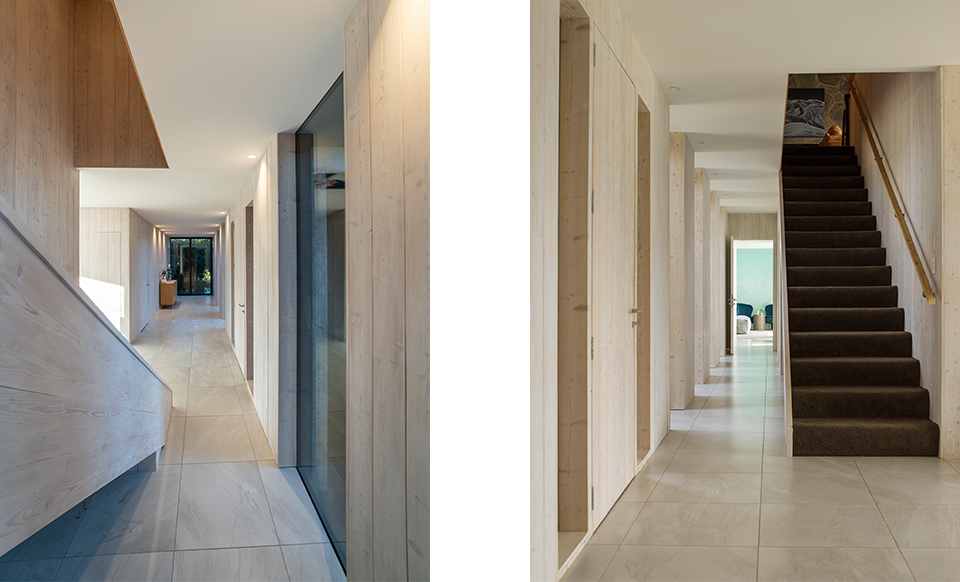
Inside, that sequence continues through a gallery used for displaying art and hosting exhibitions.
Charred larch and concrete
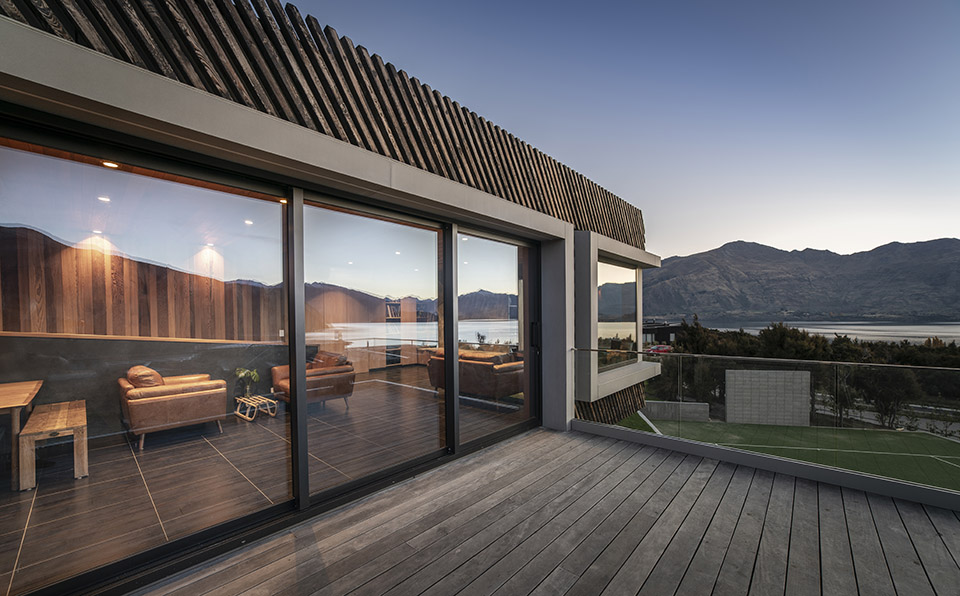
The patterned larch rainscreen takes its geometry from the windswept forms of the kānuka growing on and around the site. The timber was charred using the shou-sugi-ban technique, producing the dark, recessive finish required by the landscape controls.
Board-formed concrete provides the counterpoint. Rough-sawn timber boards leave their grain and joints in the finished surface, giving the concrete the same level of texture and detail as the timber around it.
Building for Wanaka winters
The house was constructed using structural insulated panels, with an airtight envelope, double glazing and heat-recovery ventilation. A concrete slab provides thermal mass, while the pitched bedroom wings naturally shed snow and the flat-roofed central section was engineered for snow loading.
These systems were part of creating a high-performance home for Wanaka’s cold winters, rather than being added as a generic sustainability layer.