Richmond Hill
A Port Hills retirement home organised around art, outlook and shelter
AO Architecture designed Richmond Hill as a retirement home on an exposed Christchurch hillside. The house is organised around a central gallery for the owners’ art collection, with the main living spaces and bedroom arranged on one level. At the end of the gallery, an infinity pond draws the eye beyond the interior towards the landscape, giving the collection and the view a shared axis through the house.
Living with the art
The gallery is not a separate room added to the plan. It forms the spine of the house, connecting the main spaces and making the collection part of everyday movement.
As you walk along it, the sequence finishes at the infinity pond. The water sits at the end of the axis, extending the view beyond the artwork and into the landscape outside.
Keeping the principal living spaces and bedroom on one level also responds directly to the retirement brief, reducing the need to move between floors in day-to-day life.
Making shelter on the hill
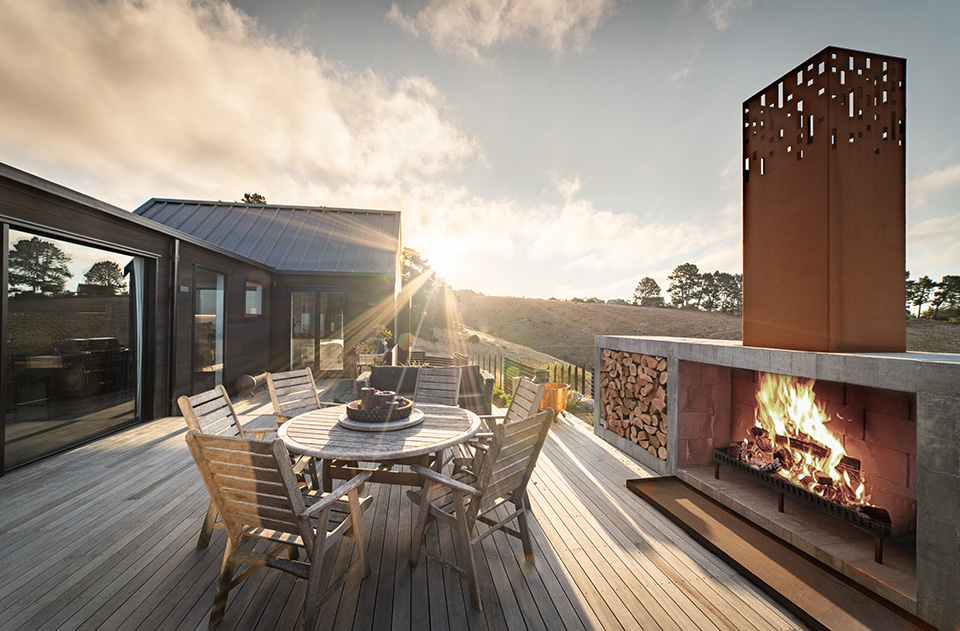
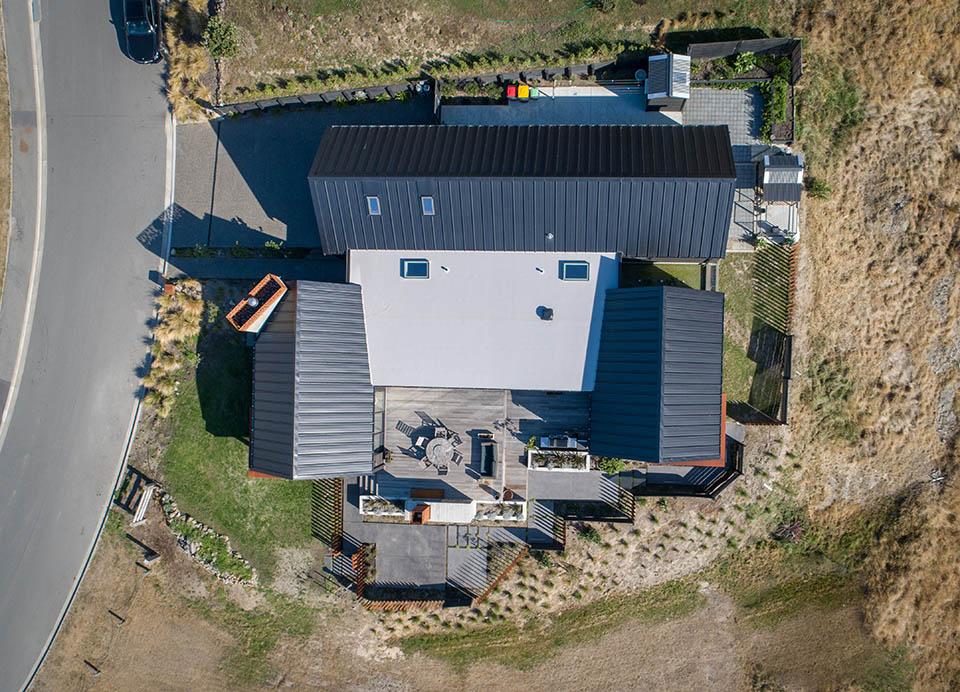
The Port Hills site is exposed to strong winds, so the house bends around a sheltered outdoor space rather than relying on a single open terrace facing the view.
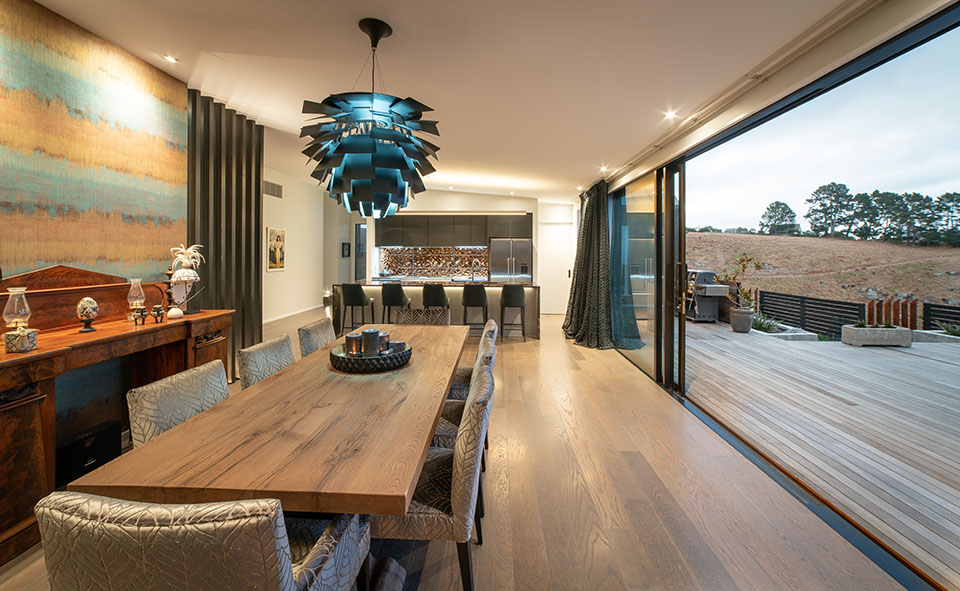
The U-shaped plan lets the building itself provide protection around the courtyard and deck. Large sliding doors connect the dining and living areas directly to this more sheltered edge, while the wider outlook remains visible beyond.
Planning height restrictions were also a significant constraint on the hillside. The roof forms and overall massing had to sit within those limits while still giving the main rooms generous volume.
Materials that belong to the site
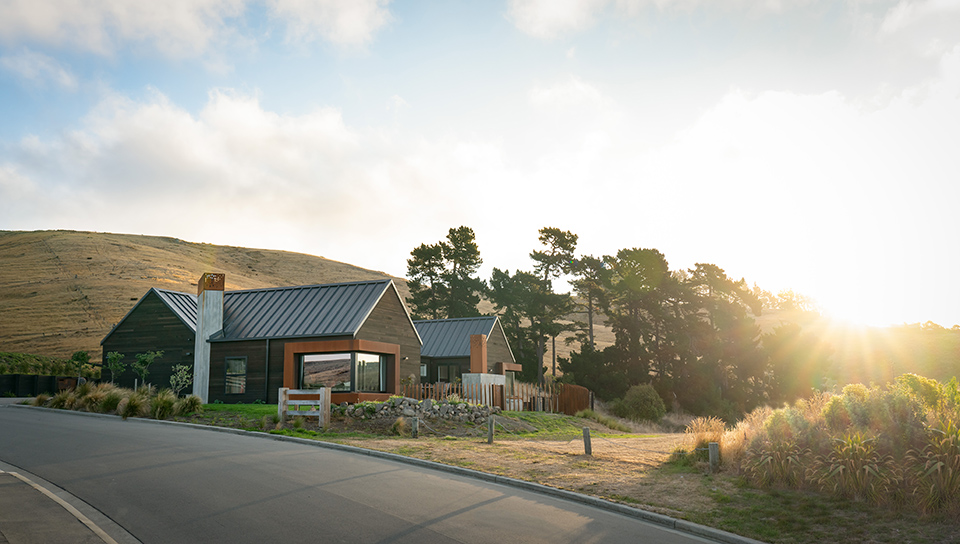
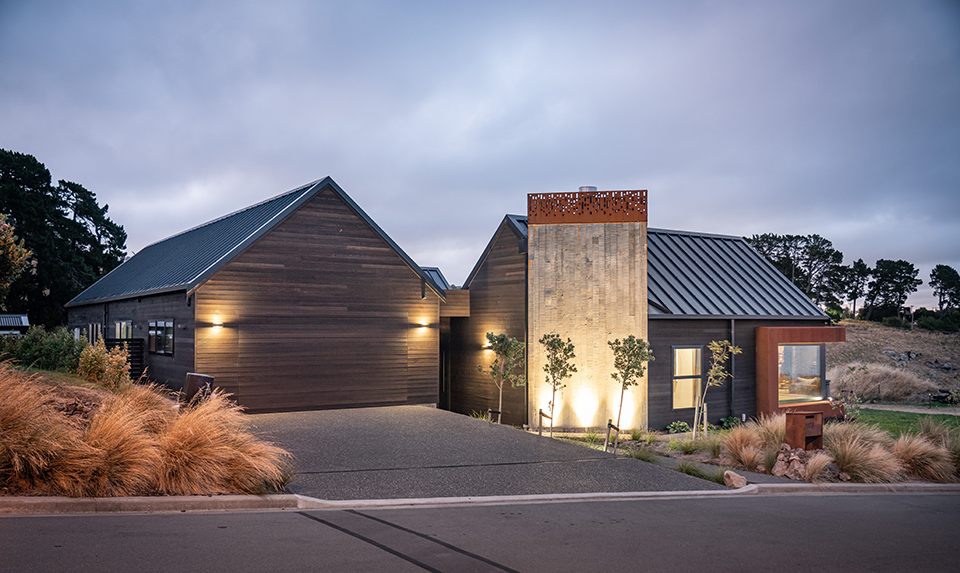
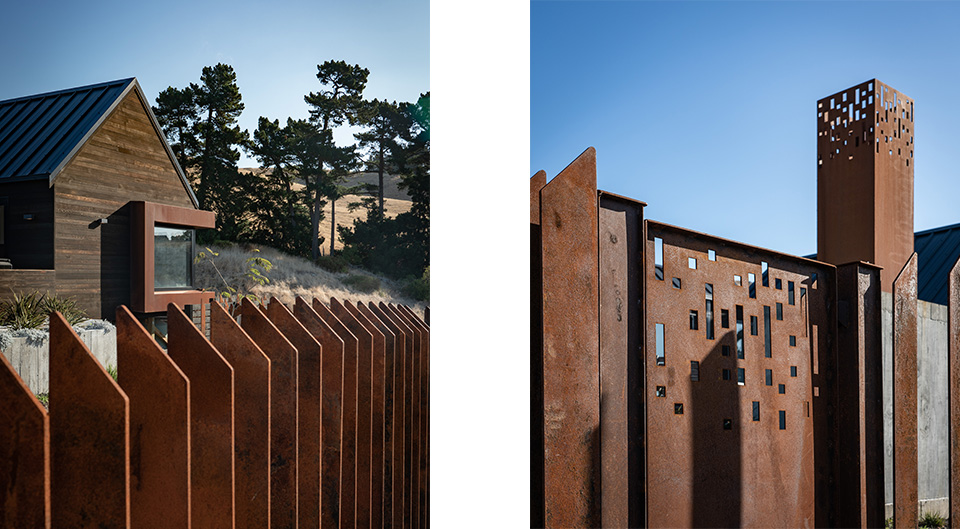
Corten steel, dark-stained cedar and board-formed concrete give the house a robust material character suited to the exposed setting. The rusted steel picks up the dry tones of the surrounding grasslands, while the grey concrete relates to the rock of the Port Hills.
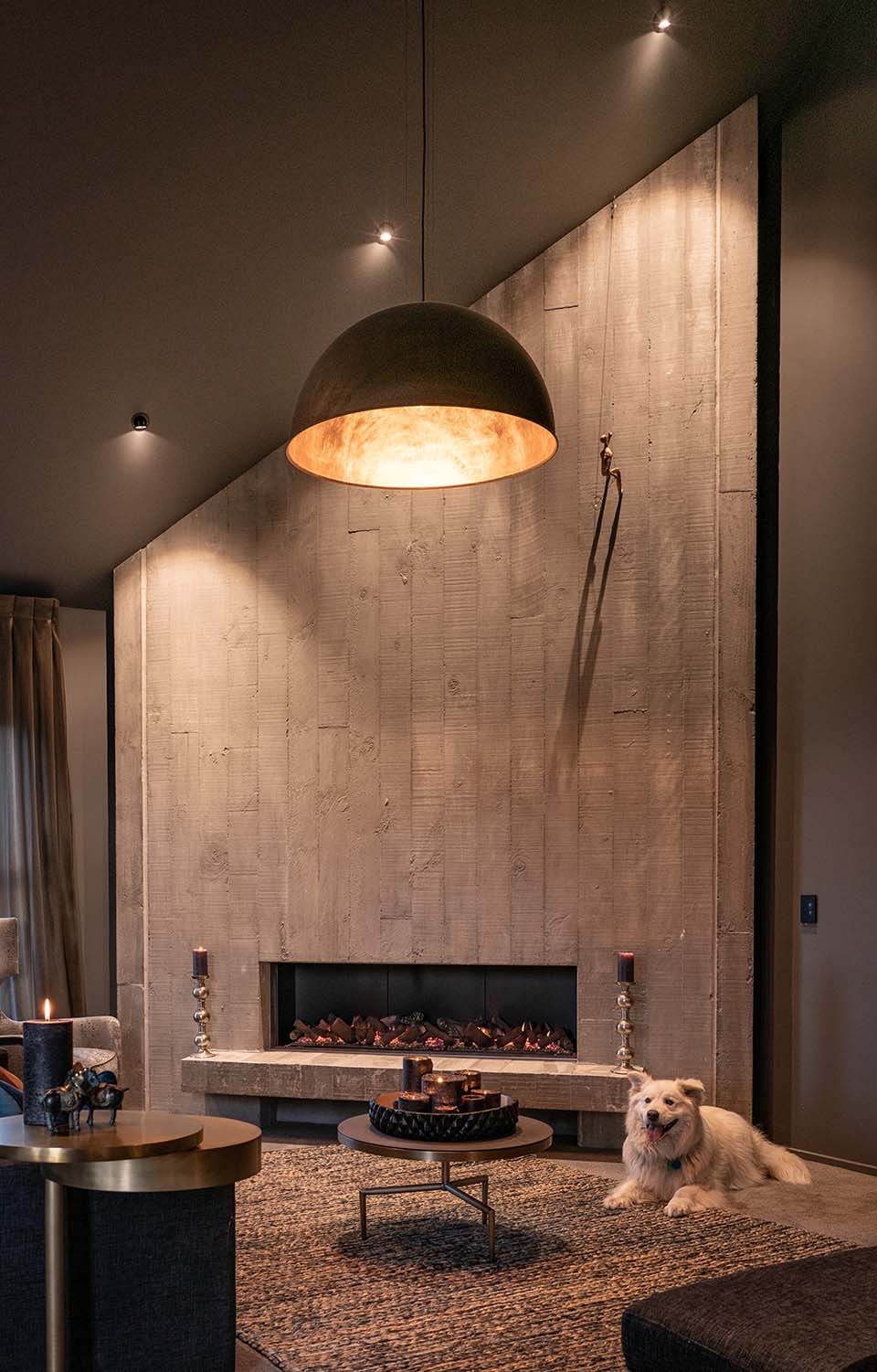
Inside, the board-formed concrete fireplace rises to the sloping ceiling. The timber grain and joints from the formwork remain visible in the finished surface, giving the wall a texture that changes with the light.
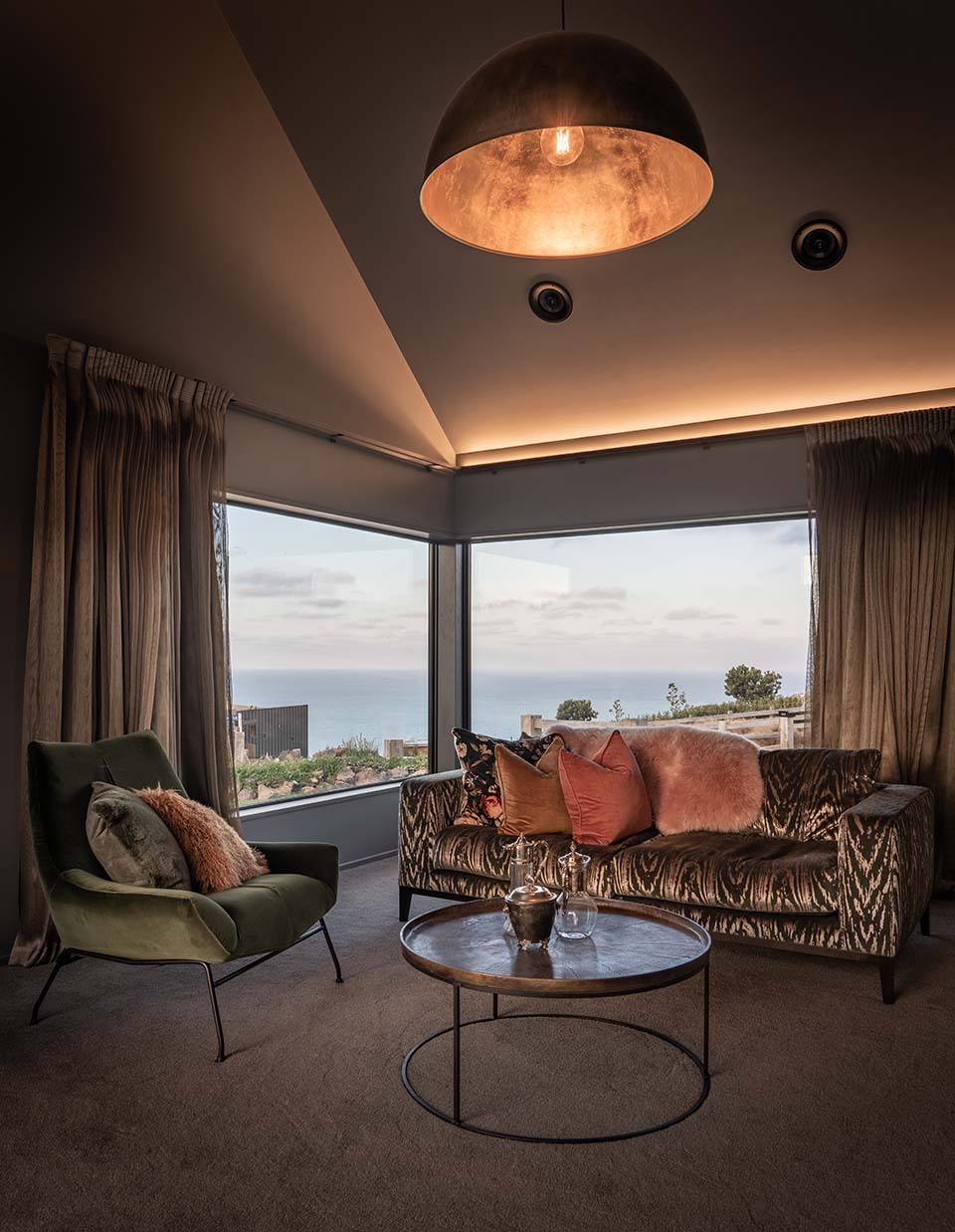
Deep rust-coloured window surrounds frame the views from inside, and the same geometric language reappears in the patterned steel gate and chimney enclosure.